
Share Henry Viccellio Jr.'s obituary with others.
Invite friends and family to read the obituary and add memories.
Stay updated
We'll notify you when service details or new memories are added.
You're now following this obituary
We'll email you when there are updates.
Select your format and elements to print

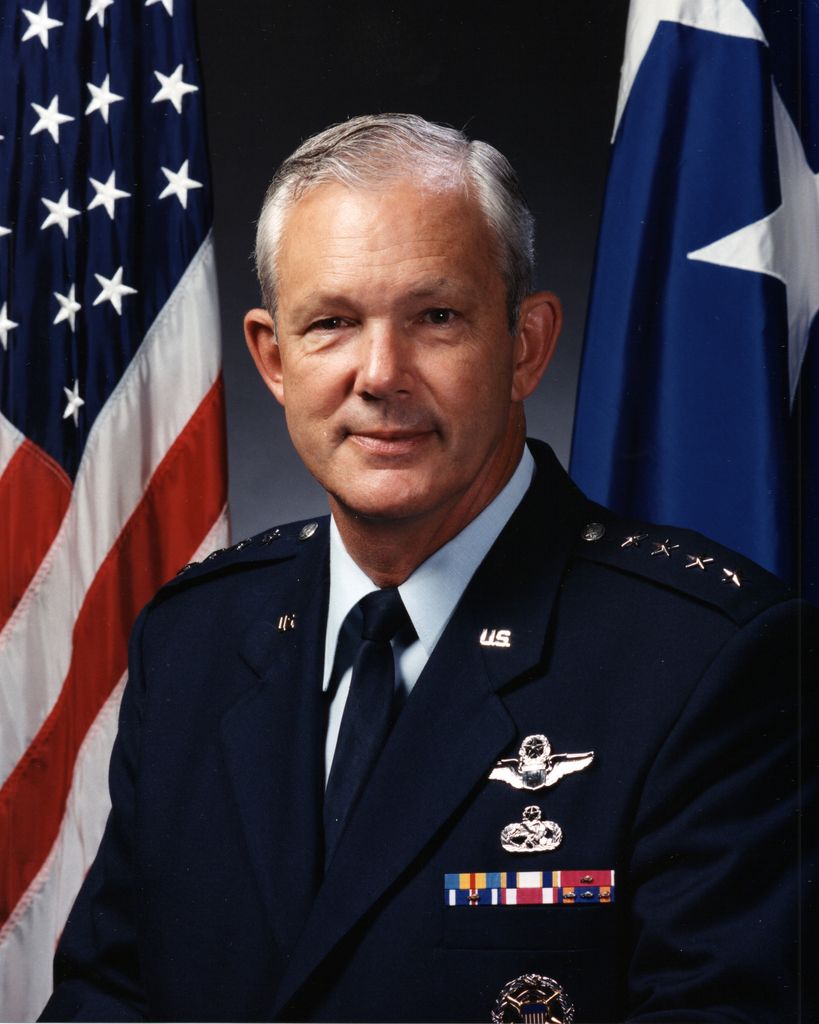
Henry Viccellio Jr.
Aug 4, 1940 — Feb 5, 2026
Share Henry Viccellio Jr.'s obituary with others.
Invite friends and family to read the obituary and add memories.
Stay updated
We'll notify you when service details or new memories are added.
You're now following this obituary
We'll email you when there are updates.
Select your format and elements to print

General Henry “Butch” Viccellio, Jr., who served his God, his country, and his family with distinction and devotion, passed away on February 5, 2026, at the age of 85.
Born into the Blue on August 4, 1940, as the son of Lieutenant General Henry Viccellio and Jane Leaverton Viccellio, Butch could have simply inherited a legacy. Instead, he built his own.
Growing up a military “brat,” Butch moved around the world, from base to base. He suited up for high school football under Friday night floodlights, pounded burgers at the local Dairy Queen with his teammates, spent summers splitting cold watermelons over car bumpers with his “Dadaw,” and camped out in the base theaters, transfixed by Marlon Brando's cool in “The Wild One” and John Wayne's grit in “Flying Tigers.” By 1955, living at Foster Field, TX, the fifteen-year-old watched the real deal—F-100 fighter pilots taking to the air (“supermen," he called them)—and knew exactly what he wanted to be: a fighter pilot, just like his dad.
He graduated from the United States Air Force Academy in 1962, where he played basketball and soared in the high jump for the Falcons, and went directly to Flight and then Gunnery School. After a short tour flying F-100s stateside, he volunteered for Vietnam and put his training to the test, not in a jet but the A1-E Skyraider close support attack aircraft—what he called “real flying”—on 235 combat missions that earned a Distinguished Flying Cross with Oak Leaf Cluster. Once home, he traded the cockpit for the classroom, becoming an Olmsted Scholar at the National Autonomous University of Mexico, where his studies in Latin American affairs were soon overshadowed by a more pressing concern: the preacher's daughter at the Union Evangelical Church. Deborah Jane Wood would become the love of his life—his wife and wingman for every journey ahead.
Their early years together were a study in adventure and adaptation: a cramped basement apartment in D.C. while he finished his master’s; the wide-open desert of Alamogordo, New Mexico; then Korea, where Debbie accompanied him on what was supposed to be an unaccompanied tour. They shared a twin bed in tight quarters, navigated foreign cultures together, and discovered they could survive on more kimchi than either thought possible. It was the beginning of a partnership that would weather every reassignment, every separation, every challenge the Air Force could throw at them. And then came the kids—first Pilar and then, four years later, Ben—and what had been a duet became a full ensemble: a family, rooted not in any single place but in each other, building their foundation on love rather than location.
His subsequent military career was marked by leadership at every level. He commanded the 58th Tactical Fighter Squadron at Eglin Air Force Base from 1976 to 1977, then the 56th Tactical Training Wing at MacDill Air Force Base, Florida from 1981 to 1983. He went on to command the 1st Tactical Fighter Wing at Langley Air Force Base from 1983 to 1985, leading one of the Air Force's premier fighter wings during the Cold War's final decade. Later, he served as Director of the Joint Staff at the Pentagon from May 1991 to December 1992, helping guide the military through the uncertainty following the Soviet Union's collapse.
But no matter how high he rose or how heavy his responsibility, family time was sacred. Whatever the assignment, wherever the posting, he made Saturday morning pancakes from his own ever-changing, free-form recipe and helped with every science fair project and research report. He packed the family into the van for cross-country drives, windows down—Utah to Washington, Texas to D.C.—the tunes of his youth (Chuck Berry, Buddy Holly, Dusty Springfield, Jerry Lee Lewis, Johnny Cash) filling the time between. And family dinners were non-negotiable; he came for the company, he stayed for the food, often declaring every meal Debbie cooked the best he’d ever had…and meaning it every time.
His service culminated in commanding the Air Force Materiel Command, where he led a major transformation of military logistics. His approach was deceptively simple: "If you always do what you've always done, you'll always get what you've always got." When others saw obstacles, he saw opportunity. When he retired from the Air Force in 1997, that same ethic led him to USAA as President of the Property & Casualty Insurance Group in San Antonio, where he continued to serve the military community and their families for the next several years.
When he finally retired for good, he and his wife Debbie settled on Bainbridge Island, Washington…a place they had fallen in love with decades before. A gathering place: where their grandchildren Nathan, Anneka and Henry came for improvised bedtime stories of Long John Silver told in the dark, for the delightfully terrifying “belly spider” tickle game that left them breathless with laughter, for lazy river floats when no other adult would take them. There, by the Puget Sound, with Mount Rainier standing sentinel, Butch and Debbie built the quiet life they had always dreamed of: a world away from flight lines and command centers and politics, a place where a die-hard family man could make his to-do lists, tend to his plants, tinker with his Vespa, go to Sunday school, root for the Spurs, watch the eagles fly, read and reflect and rest and rejoice.
He was more than stars and citations. The decorations—the Distinguished Service Medals, the Legion of Merit, the Distinguished Flying Cross—tell part of the story, but he was not your stereotypical Hollywood general. Standing six-foot-six, his physical presence could have fit the part, yet those who knew him saw something different: a man who was kind, gentle, supportive and loving above all else. He led not by command but by example, not by demands but by steady presence. In October 1994, while commanding the Air Education and Training Command, he was inducted into the Order of the Sword, the highest honor the enlisted corps can bestow upon an officer, reserved for leaders who have made exceptional contributions to the welfare of enlisted airmen. It was a recognition that meant more to him than any rank. “Always be loyal to the right people,” he would say. More than advice, it was the compass by which he lived, and his unwavering loyalty to others earned theirs in return. Integrity wasn't just a talking point; it was the bedrock beneath everything he built, anchoring a life committed to God, country, and family.
And his leadership was never more present, never more profound, than in that family. As the keystone of a unit built on love and loyalty, his true legacy is written in the hearts and lives of those who called him husband, brother, father, grandfather. It’s in the calm he carried into every crisis; it’s in the soft conversations where guidance came without lecture; it’s in the way he made those he loved feel valued and safe. For those closest, the gift of his love will resonate like his laughter—big, booming, irrepressible—a force he couldn't contain, spilling over into everyone around him, setting the whole room to laughter too, not at the joke but at the sheer magnitude of his delight.
Days before he died, he reflected: “I'd be lying if I said I wasn't proud of my career accomplishments, but what I'm most proud of is my long marriage of 57 years to Debbie and the closeness of our family.”
Throughout his career, in speeches on Leadership, he would name the first principle as “loving your people.” It was a statement that might have startled coming from a four-star, but one he practiced and lived by. For him, Love was a verb. And it was always worth the effort, even in the hardest of times. In those moments, when presented with a challenge, he was fond of saying with a smile: 'Nothing's easy.' What he couldn't have known, or what he was too humble to acknowledge, was that there was at least one easy thing: loving him.
General Henry 'Butch' Viccellio Jr. is survived by his children (Pilar and Ben), his grandchildren (Nathan, Anneka and Henry), his sister (Vicki), and above all, his wife, Debbie—who held his heart for a lifetime, who was his home wherever they happened to be.
”Oh, I have slipped the surly bonds of Earth And danced the skies on laughter-silvered wings..." —John Gillespie Magee Jr., "High Flight"
Blue skies and tailwinds.
A memorial service will take place on April 10, 2026, at 10:00 a.m. at the United States Air Force Academy Community Chapel (5134 Cathedral Drive, USAFA CO 80840), with interment of ashes at the Academy cemetery to follow. A reception with lunch will be held afterward. Though the service and interment will include military honors, attendees are invited to dress in a way that feels authentic to their connection with him.
Please take a moment to RSVP by clicking the button below at your earliest convenience.
Arrangements entrusted to Cook Family Funeral Home of Bainbridge Island, WA.
Consider a donation, as requested by the family.

Service Schedule
Past Services
Memorial Service
Friday, April 10, 2026
10:00 - 11:00 am (Mountain time)
United States Air Force Academy Community Chapel

Guestbook
Visits: 2230
This site is protected by reCAPTCHA and the
Google Privacy Policy and Terms of Service apply.
Service map data © OpenStreetMap contributors