Share Edward Morton Jennings, III's obituary with others.
Invite friends and family to read the obituary and add memories.
Stay updated
We'll notify you when service details or new memories are added.
You're now following this obituary
We'll email you when there are updates.
Select your format and elements to print
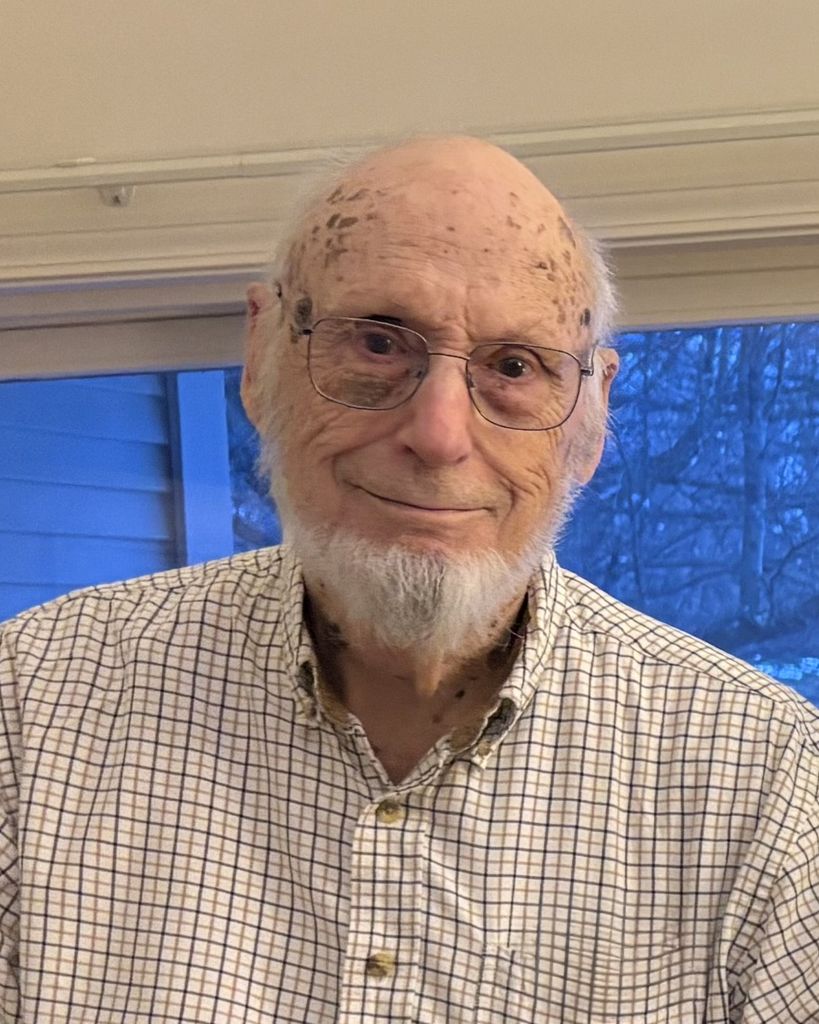
Edward Morton Jennings, III
Apr 2, 1936 — Jan 18, 2026
Bainbridge Island
Edward “Ted” Morton Jennings 3d, a versatile and forward-thinking English professor whose softspoken civic leadership strengthened the arts,community services, and public land conservation in New York’s Upper Hudson Valley, died peacefully January 18. His wife and three daughterswere by his side, at St. Michael Medical Center in Silverdale, Washington. He was 89 years old.
Ted was known for his gentle nature, strong principles, sharp mind, and quick wit. He was deeply devoted to his friends and family, most of all hiswife Sally, his true love and partner of 72 years. The two of them lived in the Albany, NY-area for 57 years, until moving last May to Wyatt House on Bainbridge Island, Washington, to be closer to their three daughters and three grandchildren. His family remembers him as an always-available, engaged, and insightful father and grandfather, who offered thoughtful advice and comfort. He never missed an opportunity to trade puns with his younger brother, Charles, of Columbia, Maryland.
As a faculty member in the English Department at the State University of New York at Albany, Ted gained national recognition for teaching one of the first “virtual” computer-assisted writing courses, for publishing one of the first electronic “paperless” scholarly journals, and for being on the forefront of championing science fiction as a subject worthy of serious study.
Ted served on the boards of the Albany Symphony, Albany Institute of History and Art, Albany Academy for Girls, the Friends of the Colonie Town Library Association, the Mohawk-Hudson chapter of the Literacy Volunteers of America, and Upper Hudson Planned Parenthood. He was a loyal tenor for 40 years in the choir at St. Peter’s Episcopal Church. He participated in municipal land planning activities in Selkirk, south of Albany, where he and Sally painstakingly restored a classic Colonial Revival home, built in 1910, to its historic beauty. They later contributed more than 180 acres from the property, overlooking the Hudson River, to the Hudson River Valley Greenway.
Ted was born April 2, 1936, in Boston. He graduated from the Noble and Greenough School and matriculated at Dartmouth College, where he became president of the freshman class, president of his fraternity, and captain of lightweight and heavyweight crew. He earned his bachelor’s degree in English in 1957 and remained in close touch with the college, serving on the college alumni council and for several decades as class secretary.
In his freshman year at Dartmouth, between semesters, Ted went to visit his parents and then to nearby Wellesley College, where he found that everyone he knew had gone home after exams. But Sally was at her dormitory’s front desk, and he persuaded her “to go to a movie.” She still remembers how awful King of the Khyber Pass Rifles was, how they laughed, and how they then went to his parents’ house to play a “serious game of Scrabble” – in French (the ultimate in showing off!). Ted and Sally Maury Swayne were married on Aug. 31, 1957, at St. Luke’s Church in Darien, Connecticut.
Tall and naturally graceful, Ted remained fit and active until late in life. He had been a waterman since childhood, an avid sailor and a top-notch oarsman who rowed for the U.S. team in the 1958 Pan Am games and the 1960 Olympic trials. He was the eighth generation in the Jennings family to serve in the navy, honorably discharged as a lieutenant in 1964 after six years of active and reserve duty.
Ted earned a PhD in English from the University of Wisconsin at Madison and was an assistant professor at Duke University for three years. Ted, Sally and their three daughters moved to Loudonville, New York, in 1968.
From that time until 1995, Ted served on the English Department faculty at the State University of New York at Albany, where he did groundbreaking teaching and research on such subjects as 18 th -century English literature, the use of modern-day technology in writing, and portrayals of the imaginary far future in science fiction novels. Unafraid of challenging the traditional conventions of academia, he was at the forefront of scholars to treat science fiction as a serious literary form, offering SUNY-Albany’s first courses in the genre in the 1970s, lecturing on the subject at conferences, and authoring two delightful entries for the Dune Encyclopedia.
Ted embraced a multi-disciplinary approach in his scholarship. He read broadly in philosophy, art, science, history, psychology, finance, and law, among other fields. He described his studies as being driven by one question in particular: “How do the conditions that surround human creativity affect what gets made and how it is received?” He was the compiler and editor of Science and Literature: New Lenses for Criticism (New York: Doubleday / Anchor, 1970) and of Literate Systems and Individual Lives: Perspectives on Literacy and Schooling, (Albany: State University of New York Press, 1991), with Alan C. Purves, which reviewers praised lavishly.
In 1984, decades before “online learning” was a term, Ted devised an asynchronous “paperless” writing course that was largely conducted via the university’s DEC-20 mainframe computer and seldom met in-person. Students obtained their lessons and assignments, handed in their texts, and shared their comments about each other’s work virtually. Ted observed that students appreciated the ability to interact digitally and the freedom from having a professor lecturing at the front of the room: It “appears to build confidence in their judgment and seems to help them become authors instead of obedient mimics,” he wrote. He presented papers on this experience at seven major conferences. In a review of Ted’s achievements, Warren Ginsberg, the SUNY-Albany English Department chair, wrote that Ted’s ideas established him “both nationally and internationally as a leader and pioneer” in the understanding of computers’ impact on the pedagogy of writing.
Ted also saw how computers were ushering in a new approach to organize, validate, and advance scholarship. In the late 1980s, before the rise of the World Wide Web, he founded and edited one of the first electronic academic journals, called EJournal, a peer-reviewed paperless serial publication about the “creation, transmission, storage, interpretation, and replication of electronic text, broadly defined.” It was recognized in The New York Times in 1989 as a vital source on the nascent field of digital writing and the potential of what would become desktop publishing.
Ted is survived by his wife Sally; three daughters Anne of Berkeley, California, Katie of Bainbridge Island, and Penny of San Francisco; his sons-in-law Andy Stacklin and Jonathan Rabinovitz; his grandchildren Cassandra Stacklin and spouse Gail Gallagher of Oakland, California, Walker Hauptman and spouse Savannah of Bainbridge Island, and Benjamin Hauptman of Seattle.
There will be memorial services on Bainbridge Island and in Albany. The Bainbridge Island service will be held on Saturday, March 14 at 2 p.m. at St. Barnabas Church. The Albany service will be on Saturday, May 9 at 11 a.m. at St. Peter's Church. Both services will be followed by receptions.
In lieu of flowers, please consider making a memorial gift to:
● the classical music public radio station WMHT-FM by online donation or by check mailed to 4 Global View, Troy, NY 12180;
● the Albany Symphony Orchestra by online donation, by phone at (518) 465-4755, or by check mailed to 19 Clinton Ave., Albany, NY 12207;
● Planned Parenthood by online donation, specifying under organizations, either the Upper Hudson or Greater Washington chapters.
Service Schedule
Past Services
Memorial Service
Saturday, March 14, 2026
Starts at 2:00 pm (Pacific time)
St. Barnabas Episcopal Church
Memorial Service
Saturday, May 9, 2026
10:00 - 11:00 am (Pacific time)
St. Peter's Church
Guestbook
Visits: 975
This site is protected by reCAPTCHA and the
Google Privacy Policy and Terms of Service apply.
Service map data © OpenStreetMap contributors